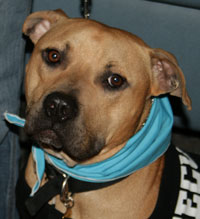
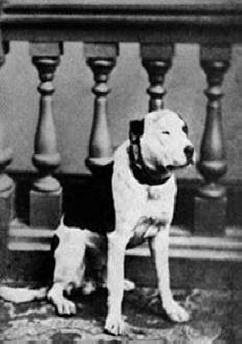
"A breed of satin and steel. Pit bulls are a mixture of softness and strength, an uncanny canine combination of fun, foolishness, and serious business, all wrapped up in love."

-D. Caroline Coile


Wednesday, July 7, 2010

Vicktory Dogs Wine Collection


• Each Vicktory Dog wine label comes on a bottle of red wine unless otherwise noted.

• Compliment your Vicktory Dog wine with a:
Vicktory Dog art print,
Vicktory dog label customers
Vicktory Dog Wine Label collection art print
 Original paintings by Cyrus Mejia, click here.

    
#14 of 22 Handsome Dan         #7 of 22 Oscar White

Vicktory Dogs Collection              Labels 1-11

All Vicktory dog purchases benefit Best Friends Animal Society exclusively.

The Vicktory Dog Wine Collection is in no way associated with football player Michael Vick. A portion of the proceeds from the sale of the Vicktory Dog Wine Collection will be donated to Best Friends Animal Society for campaigns to help strengthen laws against and penalties for dog fighting, and for campaigns against legislation to ban specific breeds of dogs.

Dog Lovers Wine Club Vicktory Dogs website

Sunday, June 27, 2010

Lost Souls: Found!

Are Pit Bulls the vicious people-eaters the media portrays them to be? The stories submitted by loving families who have adopted and rehabilitated Pit Bulls in Lost Souls: FOUND! Inspiring Stories about Pit Bulls will tell you they are a product of their environment. And, like any other dog, when treated with love and respect Pit Bulls are the most loyal, loving companions out there. This thought-provoking compilation, with introduction by acclaimed actress and animal advocate Linda Blair, shares the discrimination that Pit Bull owners face and the joy these dogs provide which makes it all worthwhile. A must-read for Pit Bull lovers and open-minded people who want to learn more about the breed.

Up to 50% of net profits from your book purchase will be divided among Pit Bull rescue groups. The book was compiled with stories from people who have adopted Pitties from rescue groups around the country. The stories are happy, sad and educational, and are meant to encourage pet rescue and paint a clear picture of life with a rescued Pit Bull.

Buy the book here and here.


Saturday, June 19, 2010

Video du Jour


Before there was such a thing as a "bad breed" there was Luke, a pit bull terrier who appeared in many films with his master, Roscoe "Fatty" Arbuckle (1887-1933), from 1914 to 1920, along with Buster Keaton and Al St. John.

Born in 1913, he became one of the first canine film stars, earned $150 a week for his master and was very popular with audiences. A high energy companion to the slapstick antics of his human costars, he was a natural for early comedy shorts. Very people oriented, friendly and agreeable to the oddities that came with working in comedy pictures at the time, in the course of his career he fearlessly performing such stunts as jumping from great heights, climbing two story ladders, running across rooftops, and leaping from one moving car to another. In addition he never failed to chase off the bad guy or save the lady in distress.

Pit Bull Poem

Click to make picture larger.

Wednesday, June 16, 2010

What Do Pit Bulls Act Like?

Here are some examples of the silly, playful nature of pit bulls. They are total goofballs who will always find a way to make you laugh.


Tuesday, June 15, 2010

Pit Bull Bigotry: Public Perception and Legislation

Feature photo: Author/Above Photo
Nancy Harder challenges the social and legislative prejudices against pit bulls.

I used to think pit bulls were born mean.

I had never met one, but I accepted the opinions of my parents and the adults around me. I didn’t question the prejudice, despite a lack of evidence.

My attitude towards pit bulls didn’t change until I met my now-husband.

In a discussion about possible future pets, my husband said the only dog he would consider adopting was a pit bull. I questioned his reasoning, only to grow ashamed when he described all the positive, loving experiences he had with the breed.

Bigotry checked, I began researching the breed.

I fell in love.

I learned that violent acts attributed to pit bulls are not innate to the breed; violence is a manifestation of the way pit bulls are treated and raised. Despite the media’s portrayal of the breed as inherently aggressive dogs with a proclivity towards fighting, pit bulls will not act more aggressively than any other dog if not abused.

The real pit bull

Pit bulls do have three characteristics easily exploited for dog fighting. It’s no surprise that with these characteristics, bull breeds can be trained to harm:

1) Very high intelligence.
2) Strong desire and determination to please their owner.
3) Physical strength and stamina.
                                                                                               Zoey
Cosmic intervention brought our pit bull, Zoey, to us. A vet technician acquaintance told us about a really sweet dog about to be euthanized. Zoey had been abused, neglected, and left to die in the street after being run over by a car.

Despite her cruel beginning and months of physical rehab, she is the sweetest, happiest dog I’ve ever known. Check out the recent "Meet Matador Pets" article for an example.

Since adopting Zoey 18 months ago, I’ve spent even more time researching the breed and connecting to other pit bull owners and rescue organizations.

I’m saddened when pit bulls are associated solely with hardcore gangsta rap, Sarah Palin, and Michael Vick. I cringe whenever someone uses the term “pit bull” as a descriptor for aggressive tenacity; it’s not only ignorant, but that bad word in writing: cliche.
                          
Pit bulls in the news

Historically, the pit bull was championed as a family dog. Petey from the Little Rascals was a pit bull and Helen Keller’s dog was believed to be a pit bull. Understand-a-bull.com keeps a list of heroic pit bull stories and Cesar Milan published a list of celebrity pit bulls.

Karen Delise, founder and director of research at the National Canine Research Council, has been researching fatal dog attacks for 20 years.

She obtained official documents and data from as far back as the 19th century and interviewed animal control officers, police, and medical examiners to complete two books on dog attacks and pit bulls, "Fatal Dog Attacks: The Stories Behind the Statistics" and "The Pit Bull Placebo: The Media Myths and Politics of Canine Agression".

According to Delise’s results, the overwhelming majority of dog attacks were by dogs who were treated inhumanely and interacted negatively with humans. There was no evidence of a particular breed or type of dog behind the majority of dog attacks.
Typical pit bull
In temperament tests conducted by the American Temperament Test Society, pit bulls received a passing rate of 82% or better- compared to only 77% of the general dog population.

Michael Vick’s former dogs

Even pit bulls that have been fought are still not permanently aggressive. After the football star Michael Vick pleaded guilty to conspiring to run a dog fighting operation, officials confiscated 50 pit bulls on his Virginia property.

The dogs had been chained to car axles. The ones that didn’t fight were beaten, shot, hanged, electrocuted, and drowned. Many people, including animal rights groups, called for the animals to be euthanized because of their alleged vicious nature.

Instead, U.S. District Judge Henry Hudson ordered each dog to be evaluated individually, not by breed stereotype, and required Vick to contribute one million dollars to the dogs’ lifelong care.

Only one dog was found to be too aggressive to save and had to be euthanized. Another was too injured to keep alive.

The other 48 dogs were placed in foster homes and animal sanctuaries, with a handful being adopted.

Despite their past, the dogs recovered from the torture. According to a St. Petersburg Times article about Michael Vick's former dogs:

"More than a year after being confiscated from Vick’s property, Leo, a tan, muscular pit bull, visits cancer patients as a certified therapy dog in California. Hector, who bears deep scars on his chest and legs, recently was adopted and is about to start training for national flying disc competitions in Minnesota. Teddles takes orders from a 2-year-old. Gracie is a couch potato in Richmond, Virginia, who lives with cats and sleeps with four other dogs.”
Breed Specific Legislation (BSL)

Prejudice isn’t just affecting public perception. Throughout the nation and world, breed specific legislation is building momentum in policy debates. Breed specific legislation bans or restricts pit bulls and other “aggressive” breeds.

Denver, Colorado banned pit bulls in 2005. As of March 2009, the city of Denver euthanized at least 1,667 pit bulls in gas chambers. Pit bull owners had two choices when they enacted the ban: inhumanely euthanize their family dogs or send them away.

Denver is not the only place that’s passed BSL.

Cities and regions across the US, Canada, and 14 other countries have banned, restricted or are considering breed specific legislation. Air France, Continental Airlines, and British Airways also embargo pit bull type dogs on their flights due to safety concerns.

Reasons BSL doesn’t work

The laws may originate out of concern for public safety, but BSL hasn't worked and doesn’t work for six reasons

1) Dog attacks aren’t disproportionately pit bulls; it only seems that way because of media portrayal.

2) The laws don’t fix the real issue: encouraging responsible pet ownership and punishing abusive and irresponsible owners.                                                              Pit bull at the pound

3) Banning pit bulls creates a black market of mis-bred and abused dogs.

4) Defining breeds is problematic. A dog can still be defined as a pit bull or other banned breed if they carry certain physical characteristics, even if the dog is a mixed breed. The pit bull breed, for example, can encompass the American Pit Bull Terrier, American Staffordshire Terrier, dogs with mixes of these breeds, even the American Bulldog and Bull Terrier.

5) It’s more expensive. According to Prince George County's assessment of BSL, it costs $68,000 to confiscate and euthanize a single pit bull. Gas chambers, like those in Denver, lessen the economic blow, but millions of dollars are still spent enforcing the ban. Those dollars could be allocated to promoting responsible pet ownership, punishing abusive owners, and contributing to other important issues like education and health care.

6) 4 million dogs are euthanized per year in the United States. With BSL, dogs are confiscated that actually have homes, adding to the number of dog deaths per year.

Outlawing and discriminating against pit bulls and other breeds is shallow and harmful. Negative group think and propaganda is no reason to hold a prejudice based on race, gender, religion, nationality…or breed.

What you can do:

Support your local pit bull rescue through donating, fostering, and volunteering.

Adopt a pit bull if you believe the breed works for your lifestyle.

Follow these tips to see if BSL is being proposed in your area.

Write your congressman about the issue.

Visit these websites and blogs for more information:
Dog Politics, Stop BSL, Anti-BSL, Understand A Bull, Pitbull Lovers, Molosos y Terriers, KC Dog Blog

How do you feel about BSL and pit bulls? What associations do you have with pit bulls? Are you considering bringing a dog into your family? Read "So You Think You Want a Dog? Four Questions to Ask Before Buying a Dog."

Author: Nancy Harder

Article from:
http://matadorchange.com/pit-bull-bigotry-public-perception-and-legislation

Monday, June 7, 2010

Pit Bull Bomb Sniffer

Neville the pit bull to retire from job as bomb sniffer for WSP


SEATTLE - He's got a reputation, but he's not living up to it. And that's a good thing. Neville the pit bull is working the ferry lines at Seattle's Coleman Dock.

He isn't supposed to be here. Neville was on death row in Canada until an escape worthy of a spy novel got him across the border and into the K-9 work force. Today he protects the people who almost failed him.

"He's the kind of dog who would take a bullet for you," said Neville's handler, Trooper David Dixon. "And there are people like me who had a bad idea of pit bulls in the past that may change their mind and love them because they're great."

"He's so sweet. I love it when you pet him and he just smashes up against you. You feel the love," said Diana Cameron, who works at the espresso stand on the dock.

And after five years and 21 actual finds of weapons or explosives, Neville prepares to hang up his badge for good. He is scheduled to retire in September.

Neville was the first pit bull on explosives patrol for the Washington State Patrol. And he's helped pave the way for four others to follow in his footsteps.

WSP currently has five pit bulls working narcotics or explosives. But Trooper Dixon says it's not so much about the breed as it is the sniffer and the disposition. Neville has a nose that knows and the temperament of a dedicated officer. Not to mention his success has helped booster the reputation of a breed known more to be fighters than crime fighters.

Trooper Dixon estimates that Neville does detection work on 150,000 vehicles a year. One dog's life was spared to benefit the lives of countless others.

Neville will remain with Trooper Dixon after his retirement.


by MEG COYLE / KING 5 News

Article from: http://www.king5.com/news/local/Pitbull-on-Patrol-88957032.html

Thursday, June 3, 2010

Meet Leo, a former Vick Dog

Meet Leo. He’s a cheerful, sweet greeter. He’s fond of cuddles and hugs. And he spends his free time sharing his affection with the sick and elderly at a local hospital (having recently passed his therapy dog tests with flying colors). He also spent the first part of his life under the dark, demeaning ownership of football star Michael Vick.

Yes, Leo is one of the fifty Vick dogs confiscated from the football player’s property late last year – although to meet him now you’d never guess at his unfortunate beginnings. In fact, it seems wherever Leo goes he garners adoring smiles and effusive compliments. What a sweet boy! Where did you get him? He’s so well-behaved! To which he responds with tail wags and dreamy gazes from his kohl-rimmed eyes. His most adoring fans are schoolchildren.

Leo doing therapy work

It’s amazing to watch, surprising to some, and yet to those who know the Pit Bull breed, not a surprise at all. Leo is the consummate example of true Pit Bull spirit – despite the life he led before with his former owner, he has made a quick ascension to stardom: ace-ing his obedience classes, playing and socializing with other dogs, and revealing himself to be a true ambassador for all canines, not just Pit Bulls. He has already begun work as a Therapy Dog with Therapy Dogs, Inc. (www.therapydogs.com), and is invited weekly to a local South Bay hospital to bring comfort and smiles to the patients there. His biggest supporters aren’t just the patients either – staff, nurses, and EMTs have taken to calling him “Dr. Leo” for his healing touch. All in less than two months.

Marthina McClay, Leo’s trainer, foster mom, and founder of Our Pack, Inc., can’t get over his popularity. “I’ve worked with hundreds of dogs. People are drawn to Leo. I’ve never had a dog that was so magnetic.” She’s quick to brag on his personality, “He’s such a tenderheart. When he came to me, I was prepared for anything. But I never realized I would be meeting the Casanova of Dogs. He has this way of romancing you with those brown eyes of his - he’s truly amazing.”

Of course, if you spoke with Leo today, he would likely gloss over his accomplishments and the association that has made him famous. Instead, he would politely take a seat beside you, plop his head in your lap, gaze up at you with those dreamy eyes and talk about how he enjoys Sunday afternoons playing with his doggie brothers and sister, and how much he looks forward to visiting more people next week.

Leo (far right & center) hanging out with his buddies.

This is the true Amercian Pit Bull Terrier: resilient, people-loving, willing to please, and just so good-hearted!

Watch Leo on NBC Nightly News with Brian Williams!

Watch the amazing photo slideshow by photographer Carol Guzy HERE!

Leo's story featured on NBC 11. Watch here!

Read about Leo's amazing work with at-risk youth on the Best Friends Network!


From: http://www.ourpack.org/leo.html

Lover Not Fighter


Photo from:


Their Nose Knows!

What a great activity for your Pit Bull! I saw this on the BAD RAP blog and had to share:

A sport that builds upon a dog’s natural ability to locate a scent, nose work starts dogs out on a course with a basic, strong smell—say a bag of stinky treats—hidden in one of five boxes all lined up. They’re walked on a leash beside the boxes and rewarded when they pick out the treat box. From there, the game is refined—with boxes scattered everywhere, less treats in the box, things being hidden higher, buried deeper, stuck in stuff other than boxes, on cars, on grassy outdoor courses, you name it. As the dog advances, so does the game. The idea, at its essence, is just to set the dogs free to do what they do best: act like a dog.

Every single dog in this class—without exception—loved it. And that only makes sense. Dogs have 220 million olfactory receptors to only 5 million for humans. That means they can smell forty-four times as well as we can! They’re designed for this sport; it employs the tools evolution afforded them. Dogs are able to follow a scent like it's a thread right to a source. Watching the satisfaction the dogs got in hunting, I was reminded (silly human!) that dogs have their own native intelligence, way more keen than the paces of sit, shake, roll over we often put them through.

And beyond their genetic predispositions, dogs get such a boost from this work. Take little Stella, for example. Some might say Stella has been something of a scaredie cat in her day. Rescued by officers during a drug raid in her hometown of Detroit, Michigan, she’d come to fear a good few things in life, boxes among them. But take a look at her on the job here, sticking her big ol’ anvil-head straight into boxes, coolers, crates, and cones, all on the hunt for the buried treasure. You’d never in a million years know this dog had a fear in the world. And neither would she.

Stella locating the source hidden in an apple basket.

Stella nosework 1 from Elizabeth Kennedy on Vimeo.
 

Stella nosework 2 from Elizabeth Kennedy on Vimeo.
Stella is excited to be working!
 
From:
http://www.blogger.com/post-create.g?blogID=4639014839385183055

Saturday, May 29, 2010

In Honor of Memorial Day


"Out of suffering have emerged the strongest souls; the most massive characters are seared with scars"-- Kahlil Gibran

In the early twentieth century Pit Bulls were America's dog, prized for devotion, loyalty, determination and bravery. They were used to represent America in WWI propaganda. America's symbol of bravery and honor, they graced posters, war bonds and recruitment paraphanalia.

Only image of Sallie on record

“Sallie” a brindle Staffordshire Bull Terrier, was regimental mascot for the 11th Pennsylvania Volunteer Infantry during the Civil War. Sallie, came to 1st Lt. William R. Terry when she was but four weeks old. Always by the side of Lt. Terry, Sallie grew up among the men of the regiment. She followed them on marches and into battle. At the battle of Gettysburg, July 1st – July 3rd 1863, Sallie was separated from her unit. Unable to find her way, she returned to the Union battle line at Oak Ridge, where Sallie stood guard over the dead and wounded. Sallie continued her faithful service until February of 1865 when during the battle of Hatcher’s Run, Virginia, Sallie was struck in the head by a bullet and killed instantly. Sallie was buried on the battlefield while surrounded by enemy fire. In appreciation of her loyal devotion, a monument of Sallie now stands in Gettysburg, directly in front of the monument that commemorates the 11th Pennsylvania Infantry.
"Jack"
Jack understood bugle calls, and was the mascot for the 102nd Pennsylvania Infantry. This fine soldier was a dependable member in his unit, His career spanned through nearly all the regiment’s battles in Virginia and Maryland. He was present at the Wilderness campaigns, Spotsylvania, and the siege of Petersburg. Jack’s duty, was to seek out the dead and wounded of his regiment once the gunfire silenced. He, himself was wounded severely at the battle of Malvern Hill. Although he was able to escape a capture by the confederate soldiers and survive the battle of Antietam in 1862, (in which 23,000 soldiers were killed or wounded,) Jack was however, captured twice and became the only dog to be traded as a prisoner of war, when during his second capture he was exchanged, according to war time protocol, for a Confederate soldier at Belle Isle. Jack disappeared shortly after being presented a silver collar purchased by his human comrades and was believed to be a victim of theft.

“Old Harvey” was the mascot for the 104th Ohio Infantry. he was beloved for the companionship and humor he provided the troops. It is said, Harvey would show his great love for music by swaying from side to side while the soldiers sang campfire songs in the evening. He was wounded in two different battles but, survived each time. Harvey’s tag read “I am Lieutenant D.N. Stearns’ Dog. Who’s Dog Are You?”

The 104th had a portrait of Harvey commissioned so that he could still be part of their reunions after his death. Today, Harvey is remembered by the Western Reserve Historical Society in Cleveland, where a portrait of the troop features a proud Harvey posing with his fellow soldiers.

“Jack Brutus” another fine soldier,(shown here in uniform) serving during the Spanish - American war became the official mascot for Company K, First Connecticut Volunteer Infantry. “Old Jack” as he was known, and his unit, spent most of the war encamped at various places here in the states providing coastal defense from Maine to Virginia. Old Jack died in 1898.


Lastly, the most recognized war dog of all time was the first decorated canine war hero and the only dog to be promoted to sergeant was an American Pit Bull Terrier “Stubby”. Born in 1917, he wandered into a Connecticut National Guard encampment on the Yale University campus. He was a scrawny little pup of about four weeks old, found there by John Robert Conroy who smuggled his beloved companion aboard the troop ship, the SS Minnesota. Stubby learned to salute and his military career began. He served beside Conroy in the 102nd Infantry 26th Yankee division, during WWI, in the trenches in France. There Stubby would seek out wounded soldiers, which were significantly less, because Stubby could hear the whine of incoming artillery shells before the humans, and became quite adept at letting his unit know when to duck for cover.

After being gassed, Stubby began warning his unit of poison gas attacks. There is no way to know how many American soldiers this Pit Bull saved but, the respect he was given by the U.S. after the war is a clear indicator of how valuable Stubby was to the men of his unit. During his Military career, Stubby aided in the capture of a German spy, was severely injured by shrapnel, sent to the Red Cross hospital for surgery, awarded the Purple Heart and sent back to his regimen. After the battle for the French village of Domremy, the grateful women of the township fashioned a hand sewn chamois coat, to display Stubby’s service chevrons, metals, pins and buttons, this became his recognized trademark, and is now on display at the Smithsonian Museum.

In his lifetime Stubby was invited to the White house by three Presidents, Woodrow Wilson, Warren Harding, and Calvin Coolidge. In 1921 John Conroy and Stubby headed to Georgetown to enroll in law school where Stubby became a practicing Hoya, he served several terms as mascot to the football team. Between halves, Stubby would nudge a football around the field with his nose, to the delight of the crowd. His performance is deemed the inspiration, that started elaborate half time shows, at football games across the country. Until his death, in John Conroy’s arms, of old age, April 4, 1926, Stubby was a “True” American Pit Bull Terrier.


Tuesday, May 25, 2010

Stella is a Star

Pop Quiz: What breed of dog is most maligned in today's society?

Bernadette Peters knows the answer (pit bull), but she doesn't believe that the reputation is deserved. She can say that from experience — the Broadway actress, book author and passionate rescue advocate has lived with a pit bull named Stella for nine years, and in all that time, has only seen sweetness and love (and lots of licking).

"She goes out in the street and see babies —she loves babies — and puppies and she'll crawl up to them so she doesn't intimidate them," Peters tells PEOPLEPets.com. "She's a very loving dog. She's really like a lap dog."
Peters wanted to do something to change people's minds about the terriers, and while she was sitting on an airplane one day, she decided that the way to do it would be to write a children's book.

And sometime over the course of her flight, Peters jotted down the text of her latest children's book, called Stella Is a Star, about a pit bull who believes that nobody likes her.

Book character Stella (because in real life, Peters' dog has no idea people are afraid of pit bulls) dresses up in costume and masquerades as a pig who also happens to be a princess. She goes to ballet class with other pigs, wearing a crown so that the pigs will respect her, but it's only when her crown falls off and her true self is exposed that she realizes people will love her for who she is.

"They're just so smart, kids. They get the whole idea of pretending to be something you're not," Peters says. "The minute you accept your individuality is the minute you can find what your path is."

In addition to helping pit bulls' reputations and children's self-acceptance, Stella Is a Star will help pets in need. Proceeds from the book will go toward Mary Tyler Moore and Peters' rescue and adoption program, Broadway Barks.

Buy this book at Amazon.com.

Article from:
http://www.peoplepets.com/news/celebrities/bernadette-peters-shines-spotlight-on-stella-her-favorite-pit-bull/1

Friday, May 21, 2010

Knock Out Dog Fighting!


The Knock Out Dog Fighting program is an unprecedented youth intervention program that is successfully stopping cruelty and abuse.

The program partners with schools, community centers, Boys & Girls Clubs, juvenile detention facilities, law enforcement and gang prevention task forces to teach children and young adults that abusing, torturing or fighting animals is not a sign of strength, power or greatness. The program addresses the underlying reasons kids are fighting dogs.

Knock Out Dog Fighting team members are out in the community, on the ground level, in schools, community centers and juvenile detention facilities with positive role models teaching children and young adults that it's not a sign of strength, power or greatness to fight, torture or abuse animals.

We need your help! Get involved!
knockoutdogfighting.org/


Double click to see entire screen.

♥ Love ♥

Pit Bull Doing Its Part to Keep City Clean

You sometimes can't help but attract attention if you're a dog...

"No, she doesn't get ice cream if she does a good job," Anne Vaini tells the three kiddos clustered around her dog, Emma.

But when you're a dog that picks up litter from the sidewalk, runs to the nearest garbage can and drops it in, you're pretty much guaranteed instant fame.

"I just wondered what it was doing,” says Justin Webb, the owner of Midwest Tattoo on Water Street. “I’d just see it walk up and down the street and pick up trash."

"The first reaction is always 'oh my gosh! Did I just see that?' Yeah, you did. She does that and puts it in there by herself," Vaini tells us laughing.

You're best bet to catch Anne and Emma walking Water Street: Friday or Saturday nights when there's more people and more litter.

"When the students came back, I noticed the street was looking really trashy and really dirty,” Anne tells us. “I though 'hey, I have a dog that can pick things up and put it in the trash cans.’ I thought it'd be good training.”
Vaini’s hope: That Emma will one day leave her trash tasks to help someone in a wheelchair.  Emma will eventually be placed with a person in a wheelchair where the skills she has developed with Vaini, such as opening and closing doors and retrieving and depositing, will help her new owner live a more independent life. Until then Emma will be a staple on Water Street, though probably more obedient than most you’ll meet on Saturday night.

"I love it because a lot of people think American pit bull terriers can't be trained and I can show them very quickly, without having to pull their leg or tell them that whole story that 'yeah, it's a dog and it can be trained.'"

And trained well. Emma was a little out of practice after a recent surgery. But, after a couple seconds of prodding she picked right up on her litter picking skills; much to the delight of the Water Street faithful.

"At least somebody is picking up the trash," laughs Webb. “There's a lot of it left here at night. Maybe we can get some more dogs down here picking up the trash."

But, it's not all work for the little litter lady...."Emma is absolutely a love bug. She's always ready to give kisses," Anne says cuddling her pup.
Making Emma one itty bitty pit bull with an extra large heart.

Reporter: Mary Rinzel with Photographer Jeff Ralph

http://volumeone.org/magazine/articles/227/No_Need_to_Fear_Trash_Dog_Is_Here.html
Words by Arya Roerig and photography by Sarah Word


Monday, May 17, 2010

Pit Bull Terrier Breaks Stereotypes

Special therapy dog breaks stereotypes for pit bull terrier type dogs wherever she goes.

She walks through the door of a Raleigh, North Carolina nursing home and residents start smiling. Later, she appears at a children’s book-reading club and becomes the center of attention. Cricket the therapy dog is in the house.

Cricket is like most therapy dogs; she’s sweet, easy going, and evokes a feeling of warmth, love, and sweet understanding. What’s unusual about her is that she’s not a Golden Retriever, Labrador, or even cute little lap dog. Cricket is a pit bull. The very same type of dog that usually makes the headlines for all the wrong reasons; Cricket is truly the stereotypical pit bull terrier type dog, not the sensationalized marauder that the media would have you believe.

Paige Burris is Cricket’s human, as well as education specialist, positive reinforcement dog trainer, and behavior consultant. She rescued Cricket from a shelter when she was seven months old. “When I got her, I learned how much trouble the breed was in, and being the perpetual supporter of the underdog, I wanted to help them any way I could.” says Burris. “I have always thought the best way is to show pit bulls in public in the most positive way possible, and leave everyone we meet with a positive impression of the breed. So after Cricket achieved her CGC (Canine Good Citizen) certification in record time, therapy work was the next step toward making her an ambassador of the breed. She excelled and continues to excel beyond my wildest dreams!”

Whenever she appears in public, Burris adorns Cricket with colorful “clown” collars which always seem to get attention and precipitate a conversation. It’s a chance to educate another person about the plight of these dogs. It’s with that in mind that Burris started The Positive Pit Bull, an organization that focuses on training, education, and socialization with the goal of keeping more pit bulls from entering the shelter system. "We're working hard to change minds about this most deserving breed, says Burris. "A breed once called "America's Dog" because of their loyalty and devotion to the family, is now the most highly euthanized dog breed across the country....it's insane! Very sad and so unnecessary!"

While most patients invite Cricket eagerly to their side, some are a bit hesitant to have Cricket come up to them for therapy. Burris doesn’t force the issue. She simply asks if they would wave and say “Hi, Cricket!” When they oblige, Cricket always responds with a big smile, tail wag, and she lifts her paw and WAVES BACK! Burris says, "It's amazing to actually SEE someone's mind change...and it is quite palpable...someone's face, just after experiencing Cricket's infectious enthusiasm or sweet, calm demeanor during a therapy visit, upon hearing she is actually a pit bull, goes from pure joy to quizzical, confused, as if they are thinking....But I thought pit bulls were vicious!" If nothing else, that’s one more person who just might look at pit bulls in a new light.

Cricket doesn’t stop with therapy work at nursing homes and children’s book circles. The lively two-year-old is always on the go. Soon she’ll be representing pit bulls in the Susan G. Komen Race for the Cure cancer walk. Cricket is part of The Positive Pit Bull's awareness campaign called Pits4Ta-Tas, a bully-loving group that will walk to raise money for the Komen cause and enlighten the public about the negative stereotypes that plague pit bulls.

Cricket is a shining example of what pit bulls are capable of in the hands of responsible owners. Just ask the kids who squeal with excitement when Cricket shows up. “Awwww! Cricket is so sweet.” one child says. “Can I read to her?” Then there’s Minerva, one of Cricket’s “regulars” at the nursing home who, at age 87, says, “I just love dogs. Cricket is perfect just the way she is; full of love and happiness. She brings a smile to the residents here and brightens the day for so many.” Cricket also spreads sunshine when she visits patients in a local hospital. Her schedule is busier than most people's! But it's all in a day's work when you're a pit bull ambassador!

Says Burris, "Anyone who knows anything about these breeds knows that their most endearing trait is their unshakable desire to please people. I would say that for most people, once you've owned a pit bull, it is nearly impossible to ever want to own another breed. This is due to their loyalty, devotion, intelligence, versatility and ultimate FUN factor! It's a combination of traits that is hard to beat."

For more information about Cricket, Paige Burris or The Positive Pit Bull, visit: http://www.thepositivecanine.com/, http://www.thepositivepitbull.com/,
and become a fan of The Positive Pit Bull on Facebook! You can find out how to start a PITS4Ta-Tas team in your own city!

How you can help:

Paige Burris is part of the Community Training Partners program from Best Friends, check this group for more information: Community Training Partners.

Images courtesy Paige Burris & Evie Curley

Article by: Ken Passarella, Best Friends Network volunteer writer
from: http://network.bestfriends.org/campaigns/pitbulls/15362/news.aspx

Tuesday, May 11, 2010

Pit Bulls Rock!

The American Dog Magazine spring 2010 issue has some great features on Pit Bulls in this issue. This stunning pic of Pitties (mom and daughter) was taken by Heather Green of heathergreenphotography.com This picture is on page 43 in The American Dog Magazine and if you would like to order a poster of this page with the pitties go to: http://www.heathergreenphotography.com/ and click on "order prints." 10% of sale goes to pittie rescues. For more info you can also email: heather@heathergreenphotography.com

Thursday, May 6, 2010

Demo the Junkyard Dog

"Demo: The Story of a Junkyard Dog" is a green-themed graphic fable that champions the spirit of today's underdog. By gently lampooning both society's 'dangerous' dog dilemma and its throwaway culture, "Demo" asks readers to reconsider the possessions and animals they might otherwise dismiss as disposable.

Developed for a broad age range, "Demo" is a 'big' book for kids and a kids book for grown-ups that speaks to the underdog lover in everyone.

Book avaliable for purchase here.
And also at:

Yes, there really is a dog named Demo!
That’s right! For over fifteen years, Demo’s been fearlessly spreading love and slobber to people everywhere. In fact, he’s licked more faces and made more friends than probably any other dog in history!

Rescued from an abandoned scrap yard by author Jon Bozak over a dozen years ago, Demo’s life has been a series of close calls and dramatic twists. Throughout it all, Demo’s unflappably positive attitude guides him through any situation, no matter how bad -- which makes him such a lovable and inspiring member of the household.

Demo’s not the only dog in the world that exhibits such “joie de vie”. That’s a quality all dogs share, especially rescued dogs, and there are tons of them out there ready for responsible homes. They’re at shelters and rescues all over the country, and each and every one of them, from PIt Bulls to Pomeranians, are waiting, wiggling and wagging in the hopes of sharing some love and slobber with a new friend.

So, if your family is thinking of adding a dog, look into rescuing one. You never know, you might get to share your home with a big, lovable galoot like Demo. Just think of the stories you’ll have to tell.

See the real Demo here!

For more about the book visit the website at:

Video du Jour


In Memory Of All The American Pit Bull Terriers

That have died in pounds and shelters,
put to sleep for no other reason than being born the wrong breed:
That spent their lives chained outside with only a barrel for shelter:
That have been bred repeatedly only to be tied and left in vacant buildings when no longer useful:
That have been fed ground glass, gunpowder and hot pepper to make them mean:
That have died fighting, ripped apart, suffering in agonizing pain:
That have been though, mortally injured, on dead piles to die:
That have been used as bait because they couldn't/wouldn't fight:
That were shot, stabbed, thrown out of windows,
and hung because they weren't tough enough:
That have been shot in the spine and abandoned to die of thirst,
starvation, and terror:
and that have been set on fire - forgive us all -
-------------------------------------------------------------------------------

Pit Bulls are probably one of the most misunderstood breeds and they have the lowest adoption rate to prove it. The first step in changing this trend is to equip the public with the information and resources necessary to make knowledgeable and educated decisions regarding adoption/ownership of these types of dogs...

As with any other type of dog, proper training of your pit bull can determine whether dog ownership is viewed as a success or a failure. Any breed of dog that is not properly trained or socialized can potentially become aggressive to its owner or family. With so many resources available, why not make the decision to gather as much information and training as possible? Remember, just as we have our own distinct personalities, our dogs have theirs....

Pit bulls have a long history. Unfortunately, people only use the portion of their history that supports their personal interest. For instance, if you want to portray pit bulls as vicious fighters, you can highlight this portion of their history and ignore the rest. If you want to portray them as heroes, you can point out Stubby, who was an honored soldier in WWI. If you want people to see them as family pets who are great with children, you can use Pete from The Little Rascals as an example. However, when considering the fate of this breed, you must consider his entire history. The constant theme throughout the pit bulls history is that, as with most terriers, they are easy to train and want to please their owners. It is up to their owners to determine what their dog will become. Will she be a fighting dog, a hero, or a loving family dog? As their history has shown, they have the potential to do exceptional things. Training determines whether those exceptional things are positive or negative....

In closing: "You cannot judge an entire breed of dog on a few individuals."

"If you want to portray them as heroes, you can point out Stubby, who was an honored soldier in WWI. If you want people to see them as family pets who are great with children, you can use Pete from The Little Rascals as an example. "

Sherry Kidwell
Kidwell Productions
http://www.justiceforgage.com/


Double click video to see entire screen