"A breed of satin and steel. Pit bulls are a mixture of softness and strength, an uncanny canine combination of fun, foolishness, and serious business, all wrapped up in love."

-D. Caroline Coile


Saturday, September 29, 2012

Why I Care About Pit Bulls

Fernando Camacho, founder of the FernDog Rescue Foundation, gets some love from Hayley.
 
Have you ever crossed the street to avoid a person with a pit bull? Or met someone who assumed your pet was dangerous because of their breed, not their behavior?

Fernando Camacho, a North Jersey dog trainer recently honored for his rescue work at Pets & Heroes, has been there. I asked him if he’d write a guest post about breed discrimination and pit bulls based on his personal and professional experience. So read on, then share your own opinion here or on Facebook:

About seven years ago, something happened that really surprised me. I was walking my dog, Hayley, through the park by my house on a beautiful summer day. Tons of families were out enjoying the day together, and kids were running and playing everywhere.

It wasn’t long before some of the kids spotted Hayley and ran over to us in excitement. They were all very polite and asked if they could pet her. Hayley is always up for making new friends, so I invited all the kids to come over and give her some love.

In an instant, Hayley was swarmed by a small pack of little people. Five boys and girls patted her head, stroked her neck and hugged her belly. Hayley tolerated all the aggressive petting as she always did, with a calm and quiet tolerance.

Soon, Hayley’s allure died down, and the kids began to disperse back into the park to play. As the children were leaving Hayley’s side, a new little girl approached with her mom in tow and asked if she, too, could pet my dog.

“Of course,” I said. The little girl began stroking Hayley’s head as I exchanged smiles with her mom.

After a moment, the mom asked, “What kind of dog is she?”

I happily replied, “She’s a pit bull.”

In an instant, her smile transformed into a shocked grimace and she quickly yanked her daughter away from Hayley. Her daughter’s questioning of why she was being taken away from this nice dog went unanswered as the pair backpedaled away.

That was the first of many experiences I would have with the misconceptions of pit bulls. Back then, I wasn’t a dog trainer and actually knew very little about the breed. All I knew was that I fell in love with Hayley the moment I met her, and that she’s a truly amazingly loving dog.

Years later, after many other similar encounters with people who have let media hype and hearsay — not personal experience and facts — shape their beliefs, I have realized that if any animal needs a hero, it’s pit bulls.

What really gets me fired up over the bad perception people have of pits is that most of these people have never, ever had any kind of face-to-face encounter with one. If you’re afraid of something you’ve never had experience with, it’s considered an irrational fear. And making decisions when you’re irrational is never a good idea.

The problem with listening to the media for information is that in addition to being sensationalized, it’s being reported on by people who have little or no knowledge of dogs. Go ask any dog behavior professional, and you’ll get some educated information to base your beliefs on. I have yet to meet a dog trainer who thought pit bulls were bad.
 
                                           Petey, far right, was part of the "Our Gang" family.
 
Pit bulls are an amazing breed that were originally known as the “nanny dog” because of their great affinity for children. Unfortunately, as of late they have been bred by some stupid people to be dog aggressive (but never aggressive toward people), so depending upon the individual dog’s genetics, they can be inclined to be grumpy toward other pooches.

Physically, they are built like tanks and are incredibly strong. Because of this, they are equipped to do more damage than most other breeds. So if they do bite, they can cause much more damage.

But take it from someone who has worked with hundreds of dogs and been bitten more than a few times: Pits are not the ones doing most of the biting. They’re just the only breed newsworthy enough to make headlines. For some reason “Dachshund Attacks Ankle” never makes the ten o’clock news (Dachshunds, by the way, statistically bite more people and dogs than any other breed). According to the American Temperament Test Society, pit bulls actually score about the same as golden retrievers and standard poodles on temperament tests.

This is no surprise to me and other dog professionals — we have the ankles scars to prove this.

So here’s the deal: Pit bulls are no more dangerous then any other breed. Any dog can be trained to be a well-behaved lover of life, and any dog can be trained (intentionally or inadvertently) to be aggressive. Pits are just designed to do more damage when things go bad.

That’s why I believe that having a pit bull comes with a great responsibility to train them well and to show the world the real dog — the ultimate family dog that loves everyone with tongue-dripping enthusiasm.

All I really ask is that you don’t generalize and make assumptions of dogs you don’t know. Keep an open mind, stop watching the news and start meeting some pits. If you can do that, I guarantee you’ll have your kids hanging off my dog the next time I bump into you in the park.

Fernando Camacho (aka Fern) is certified in dog behavior and training, and owner and operator of his own training company, FernDog LLC. In addition to his private training and consultations, Fern teaches group dog classes, and conducts seminars throughout New Jersey and New York. He is an AKC Certified Canine Good Citizen (CGC) Evaluator, a Training Partner with the Best Friends Animal Society, created his own mentoring program where he instructs aspiring dog trainers, and this year launched his own online program to become a dog trainer, called Make Dogs Your Life. Fern is also involved in animal rescue and is the founder and director of the FernDog Rescue Foundation, a nonprofit dedicated to aiding animal shelters and rescue groups. He is the author of two books: a dog behavior book, and a novel inspired by his own pit bull.

by Naomi Seldin Ramirez
http://blog.northjersey.com/jerseydog/6544/why-i-care-about-pit-bulls/

Monday, September 17, 2012

Overcoming Stereotypes

A psychology professor explains how stereotypes come about and how pit bull owners can help change them.


By Dana Litt, Ph.D. (Reprinted from StubbyDog.org)

As a pit bull lover and owner, I am well aware of the many negative stereotypes we face on a daily basis and the potential consequences they have on our lives. Before understanding how to combat these negative stereotypes, it is first important to understand what they are, where they come from and how they become deeply engrained in society.

What are Stereotypes?


A stereotype is a generalized belief about the qualities or characteristics of a particular group. Although stereotypes can be positive or negative, a negative stereotype about a group often leads to prejudice (a negative judgment or unequal treatment towards a member of the stereotyped group). Although there are several theories that attempt to explain how stereotypes are formed, most psychologists will agree that people develop perceptions about how a typical “person” (or in our case, dog) in a marginalized group looks, thinks or behaves. Consequently, they form stereotypes of the group as a whole and apply them widely.

The Pit Bull and Pit Bull Owner Stereotype


Of particular importance to StubbyDog readers are the negative stereotypes associated with both pit bulls themselves, as well as stereotypes about the “type” of person who owns a pit bull. Most of us are sadly familiar with the stereotypes surrounding our dogs – that they are “evil, bloodthirsty beasts” or “unpredictable wild animals,” or “unpredictable and uncontrollable.” In addition, pit bull owners have been the target of negative stereotypes. On Internet message boards, in news articles and in political speeches, pit bull owners are routinely disparaged as nothing more than criminals, drug dealers, trailer trash, thugs, gang members or social deviants. Politicians and community members alike routinely state they don’t want “people like us” in their communities. These stereotypes are pervasive and by making both owners and the dogs seem abnormal, frightening and even dangerous, society easily endorses inhuman policies like breed-discriminatory legislation and other forms of discrimination.


Why do These Stereotypes Persist?

In psychology, the confirmation bias is the process by which a person forms a theory and then searches for things that prove their theory while ignoring things that are contradictory. This process allows stereotypes to both form and grow and become even more deeply engrained. With each event that confirms the stereotype, it continues to grow and take hold, while events that refute the stereotype are minimized or rejected.

We can apply the confirmation bias to the stereotypes of pit bulls and pit bull owners. Events which confirm that a pit bull is a killing machine are counted and recalled over and over, while hundreds of thousands of normal, sweet, friendly pit bulls are completely ignored. Events involving a heroic pit bull are difficult to find coverage of and even when they exist in mainstream media, they are usually brief and may not mention the breed specifically, whereas any story shining negative light on pit bulls is front page news. The repeated exposure to such messages only further confirms peoples’ preconceived notions about pit bulls.

However, it’s not just selective interpretation of pit bull related events that leads to stereotyping. Much of the hatred and discrimination toward others stems in part from a lack of familiarity. People who are unfamiliar with pit bull owners are reacting to the stereotype, not reality. Some individuals’ only exposure to pit bull owners has been in a negative sense and for many, has not been a personal experience but rather something they heard or saw on the news. Once these stereotype seeds are planted, most individuals can be very difficult to persuade that what they are familiar with is neither normal nor acceptable among responsible pit bull owners, due in part to the confirmation bias.

How to Fight the Negative Pit Bull Stereotype


Clearly, many commonly held stereotypes have negative consequences in terms of unequal perceptions and unequal treatment of different groups. To address this, some researchers have devoted their work to studying how to change or extinguish people’s stereotypes. Although there are several hypotheses about how this might occur, researchers generally agree that the best known way to change people’s stereotypes is to continually provide new information in different ways that contradict the stereotype. For example, if a person believes that pit bulls are vicious and unstable dogs, the best way to change this belief is to provide many different examples of pit bulls that have proven themselves to be stable, social and friendly family pets. One valuable way of achieving this is to promote favorable interactions with pit bulls. This may provide the person with new information that does not typify the stereotype and may even contradict the stereotype completely.

This process takes a concerted and careful effort on the part of all pit bull owners and supporters. It is imperative that all pit bull owners take active steps to make their dog a breed ambassador. Do everything in your power to be the best dog owner you can possibly be. Because you own a highly stereotyped type of dog, you will have to work harder to overcome that handicap than you would with a more socially acceptable breed of dog. For example, with many breeds, people think that misbehavior is “cute” or tolerable. With pit bulls, the same behavior is considered “vicious” and “deadly.” Fair? Not at all. Reality? Yes. Keep your dog under control at all times, and make sure you have done plenty of socializing and training; seek help from a professional if necessary. If your pit bull goes out in public, he needs to have good manners.

My pit bull Teddy is not only an ambassador (ambassadog?) on walks around the neighborhood, but I’ve routinely utilized him during my teaching to both educate students on the pitfalls of stereotyping as well as to help promote positive interactions with a type of dog they may not know much about other than what they read in the papers. Each semester I devote an entire lecture to stereotyping and discrimination, and a popular class activity is to ask people to think about the typical stereotypes about various people, objects and groups. Naturally, I began including pit bulls and pit bull owners in this activity. After having volunteers list some of the traits they associate with each object in the list, I show a counter-image to challenge their stereotypes. For pit bulls however, I have had a friend walk Teddy into the classroom and do tricks for us. When they find out that he is my dog (a professor owning a pit bull?!), many students have been shocked, but after class is over, quite a few want to come up and meet Teddy and often tell me that this is the first time they’ve ever actually met a pit bull. Teddy has also been an eager participant in my lectures on learning, especially when it involves positive reinforcement in the form of cookies. By integrating Teddy into my teaching, I’ve been able to expose many college students to pit bulls in a positive light that counteracts the negative stereotypes they currently hold (or confirms the positive stereotypes of pit bulls being goofy and sweet for those that are already fans of pit bulls).


Although there is a lot we can do to ensure that our dogs are the best possible ambassadors for the breed, we must remember that we as pit bull owners are also unfairly stereotyped and that in order to counteract this, we must always be an outstanding and responsible dog owner. Learn and follow the laws, make friends with your neighbors, show interest in your local government, go to neighborhood meetings, and speak with maturity and wisdom. I realize this sounds like a tall order, but we owe it to our dogs to make a favorable impression on the people who hold negative stereotypes about the typical pit bull owner. You have to do your part to separate yourself from the stereotypical pit bull owner. Over time, with enough positive interactions with responsible pit bull owners, hopefully people will learn to adjust their original views and realize that pit bull owners come from all walks of life and are no longer a feared group of outsiders, but rather an integral part of the community.

By taking the appropriate steps to present both our dogs and ourselves in the best possible light, I do believe we can make a difference. Remember that every interaction counts and that the best way to fight a stereotype is to harness the sweet nature we all know our dogs have and share it with the world!

About the author: Dana Litt received her Ph.D. in applied social psychology in 2010 and is currently an assistant professor at the University of Washington. Growing up, Dana always had dogs, but it wasn’t until she adopted a little brown and red pit bull puppy named Teddy in 2008 that she found herself getting involved in animal welfare and breed advocacy. Between having a pit bull of her own, volunteering at a local animal shelter and being part of local Seattle pit bull groups, Dana is truly a champion for the breed.


Video from It’s the Pits that demonstrated Dana’s article

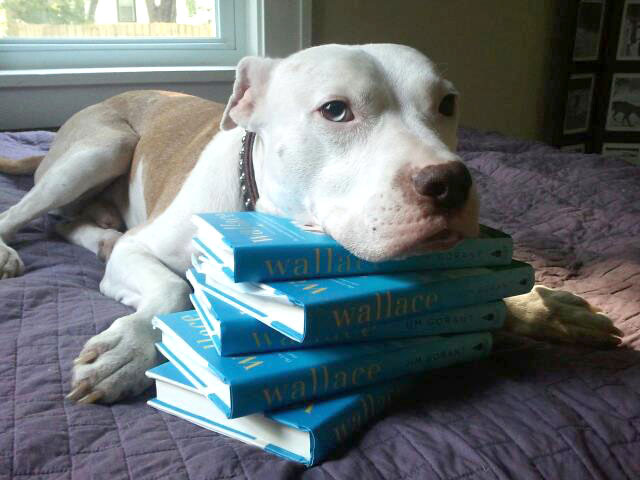
Wallace the Pit Bull Needs Your Help

This post was supposed to be a happy story about an awesome pit bull and his incredible family. A tale of a pit bull that triumphed in life and had an incredible book written about him.

Sadly, things have changed.

Let’s start with the happy things. Jim Gorant, the great writer of “The Lost Dogs: Michael Vick’s Dogs and Their Tale of Rescue and Redemption” first met the Yori family because Andrew and Clara Yori had been one of the families that stepped up to adopt a Michael Vick dog. His name was Hector and we, the Dog Files, spotlighted Hector, Andrew and Clara for our Pit Proud short film which you can see here. Pit Proud: The History Of The Pit Bull. When we filmed this episode we also met Wallace, an awesome pit bull that the Yori family rescued, loved and in turn, became into a Frisbee catching champion.

Gorant, who is normally a sports writer, had built up quite a dog loving following because of “The Lost Dogs” and was looking for a follow up subject. Andrew told him Wallace’s story and the rest is history. You can now buy the story of Wallace right here! Wallace: The Underdog Who Conquered a Sport, Saved a Marriage, and Championed Pit Bulls–One Flying Disc at a Time.

                                           Yeah, I have my own book, what’s it to you?

While on their book tour the Yori’s noticed something wrong with Wallace. They immediately took him to a hospital where he had emergency surgery and had a mass on his spleen removed. It turned out to be canine hemangiosarcoma, an incurable form of cancer. This past week they visited an oncologist where they are exploring treatment options for Wallace’s time left, which could be a month, or it could be 10.

Many people have asked how they can help. The Yori’s, in return, wrote this on Wallace’s facebook page.

_________
A few people have asked how they can help or contribute to Wallace’s care. At this point, we are not in a position to turn people down. On the same day that Wallace had emergency surgery to remove his splenic mass, his best friend Angus tore his cruciate ligament. Now the diagnosis is confirmed that Wallace has hemangiosarcoma, an aggressive cancer. We are researching our options and currently have appointments set up with an oncologist and a holistic vet for Wallace. Angus is scheduled for TPLO surgery on Monday 9/17. The outpouring of love and support has been overwhelming. We can’t express our gratitude enough. We can assure everyone that we will make decisions based on his best interest. We want quality AND quantity. Here are some ways that people can help.

1. ChipIn. So far the vet bills total almost $6000. If we can get help with even a portion of that we would feel so grateful. ChipIn For Wallace and Angus.

2. Buy Wallace’s book. Wallace: The Underdog Who Conquered a Sport, Saved a Marriage, and Championed Pit Bulls– One Flying Disc at a Time Make sure your local bookstores and libraries have it. Read our story. Share it with others. Wallace has made a positive impact on this world and he has more to do.

3. Help a homeless pet. Donate to your favorite shelter or rescue in Wallace’s name, volunteer your time, adopt – Petfinder is a great resource. Then tell us about it. Knowing that something good is being done in tribute to Wallace makes us feel happy.

4. Send stuffies or treats. Wallace loves to destroy stuffed toys, with or without squeakers (they will be destroyed immediately so don’t bother purchasing expensive ones). Treats must be grain-free and poultry-free. Good brands for him are ZiwiPeak, Raw Bistro Stix, Wellness Pure Rewards (venison/salmon), Pure Vita (beef liver/sweet potato). No chews except for Zukes Z-Bones (he hardly has any teeth left). You can send them to him at 4712 19th St SE, Rochester, MN 55904.

5. Continue to send him positivity and love. Say prayers, wish him healing light, reiki, good thoughts… I believe all of that good energy is good for him.

6. I (Clara) am currently doing a painting of Wallace and I will be selling prints online to help with his medical bills. Those should be ready next week if you are interested.

7. Hug your pets and be glad for every moment you have with them. Their lives are too short and they deserve every ounce of goodness possible.
_________
Folks, when we talk about great, responsible dog owners, the Yori’s would be the photo next to the definition. They have been tireless advocates for dogs, have brought a great amount of awareness to breed specific legislation and have simply allowed people to see the joy that pit bulls can bring you. The Dog Files count them amongst our closest doggie friends and hope to work with them for years to come. Anything you can do to help would be incredible. As hard as it has been to get through the writing of this article, I can hardly imagine what the the Yori’s are going through.

We love you, Wallace! You have done so much in your life to help your fellow dogs!

With Love,
Kenn, Max & Remy
                                                     Andrew, Clara and Wallace at the Vets.

http://www.thedogfiles.com/2012/09/17/wallace-the-pit-bull-needs-your-help/

Thursday, September 6, 2012

Ethan Zohn and Jenna Morasca Adopt a Rescue Dog

There are plenty of laughs at Jenna Morasca and Ethan Zohn's New York apartment these days, thanks to a new furry friend.

After 10 years together, the former Survivor winners, who powered through Zohn's long treatment for Hodgkin's lymphoma, have adopted a pit bull/mastiff mix they named Bobbi-Ricki Zohn Morasca.

"Our lives have been very intense and serious the last year with Ethan's illness, and Bobbi has brought lightness and humor into our house," Morasca tells PEOPLE. "We constantly find ourselves laughing hysterically at her when she tries to talk to us with her half-bark, half-howl voice. She has brought a ton of laughter and love … we all are benefiting greatly from it."

Adopting this not-so-little bundle of joy, who is about 5 years old, has been a longtime dream for Morasca, a dog lover since "forever."

"I love big dogs, and specifically asked for a pit bull from the shelter because I wanted to show people that they are not mean, cruel and scary dogs," says the recent Columbia University graduate, who first fostered Bobbi through the Dog Habitat Rescue of Brooklyn, N.Y.

"It is rewarding beyond words to rescue a dog from the shelter and have that dog become part of your family," Morasca adds. "And this lovable pit bull should be the mascot of all pit bulls because she is a dream come true."

But Morasca and Zohn both fell hard for the "chill" lovebug, and the foster pup quickly turned into much more than a temporary visitor.

Though Zohn has never considered himself a dog person, he is thrilled with the new addition, who has already found a favorite spot on her very own chair next to Mom and Dad. Sharing responsibilities and walks have brought the couple closer together, too.

"Now we take nightly walks with her. We just talk and enjoy each other's company – and Bobbi's company – [without] cell phones, which we did not do before," she says. "Ethan and I are so happy and we could not envision our lives without her."

By Amy Jamieson
http://www.people.com/people/mobile/article/0,,20624959,00.html

Tuesday, August 21, 2012

When Grandma Doesn’t Know Best

Changing misperceptions often happens one person at a time


By Kirstyn Northrop Cobb  (Reprinted from StubbyDog.org)

We all know that there are misconceptions about pit bulls out there, and as people who love them we know that it is our job to change minds. But what if the critics are your own family members?

My grandmother is terrified of dogs. Not just dogs, all animals. Dogs, cats, bunnies, mice, you name it. I’ve seen her not go out into her yard because there was a squirrel in it. She was never pleased with the fact that I have dogs, and it just got worse when I rescued my first pit bull dog.
He was just a baby when I brought him home. A little guy who needed rescuing, and how could I turn him down? She knew that I brought a new puppy home. I wasn’t going to tell her that it was a pit bull. She didn’t know what one was anyway, all she knew is what she heard on the news. But someone told her. I still don’t know who, but one day, she confronted me. “Is that dog really a pit bull?” she asked. “Yes,” I said. And then she sat down and cried. Yep, cried. “But you have a daughter. How could you do that to her? What are you going to do when that dog rips her face off?” Those were her exact words. I said, “We’ll be fine”.

She didn’t let it go. She called and called and begged me to reconsider. She asked my husband how could he let me do this? (I would like to point out something here: “Let me do this”? Really? Anyone who knows me knows that there is no “let me do this.” I’m going to do what I’m going to do and that’s that.) She called my mom. Maybe my mom could convince me to change my mind. Maybe my mom would have my daughter stay with her, and then she would be safe. My poor 85-year-old grandmother was up at night worrying and was losing sleep.

Eventually, as time wore on, she must have realized that the dog was staying. The calls were less frequent and eventually stopped. After my little pit bull, Gus, lived with us for about four years, I figured that it was safe to bring it up again. So one day, I said to her, “You know, we’ve had this dog for about four years now and nothing bad has happened.” She replied, “Well, maybe your dog is OK.” And I responded with, “Well, then by default, they’re not all bad, huh?”

She conceded.

And that’s what it’s all about. Changing minds one at a time. And if we can change my grandmother’s stubborn mind, then one by one, we can repair a damaged reputation.

American Bar Association Steps Up For Pit Bulls


The American Bar Association (ABA) is committed to establishing model ethical codes, among the many support services that it provides for the legal profession. It is the largest voluntary professional organization in the world, and its resolutions provide reference and guidance not only for practicing attorneys, but also for the formulation and drafting of legislation and local ordinances.

On August 6th, the House of Delegates of the ABA passed a resolution that calls for breed-neutral dangerous dog laws that focus on the behavior of dog owners and their pets rather than breed, breed types, or breed appearance as basis for laws intended to protect the public from dangerous dogs.

I am proud to say that Best Friends senior legislative analyst Ledy Vankavage, who currently serves as the chair person of the Animal Law Committee of the ABA, was instrumental in the passage of the resolution and took the lead in its drafting, along with Katie Barnett, also from Best Friends, Kara Gilmore of the National Canine Research Center, and Rebecca Huss of Valparaiso University Law School. Ms. Huss, it should be noted, was the court-appointed guardian and special master of the dogs rescued from the Michael Vick dog-fighting ring and played a key role in saving their lives.

Breed-based laws, such as the pit bull ban in Denver, Colorado, are legally inconsistent with the bedrock principle of due process because visual breed identification has been proven to be highly unreliable and because such laws ignore the actual behavior of the dog or the potentially irresponsible behavior of the dog owner. Breed laws result in the pointless killing or relocation of thousands of perfectly well-behaved pets who pose no danger to anyone based solely on appearance while leaving genuinely dangerous dogs of other breeds or appearance at large in the community.

Breed-neutral laws, on the other hand, encourage the early identification of irresponsible dog owners who encourage aggressive behavior and known canine behaviors that precede bite attacks and hold owners responsible for preventive action, such as secure property fencing, leashing in public, and other appropriate precautions to protect the public.

The public and the animals affected deserve laws that actually protect them. We are heartened by this common sense resolution by the American Bar Association.


By Gregory Castle
CEO, Best Friends Animal Society
http://blogs.bestfriends.org/index.php/2012/08/10/american-bar-association-steps-up-for-pit-bulls/

Pit Bull Adopts Abandoned White Lion Cub


A white baby lion cub named Jojo was taken away from her mother shortly after she was born in July to have a naval infection treated. When her caretakers at a German zoo tried to reunite baby Jojo with her mother, Nala, she rejected her daughter.

So German zookeeper Jeanette Wurms took Jojo home with her. And to the surprise of Wurms, her male pit bull mix has become a father to the highly endangered white lion cub.


“Lejon looked after her with me from the first day,” Wurms, a lion keeper at the Stukenbrock safari park, told The Local.de. “Licking her clean, and lying next to her when I was giving Jojo her bottle. Since then we have become a very special family.”


Lejon, whose name means lion in Swedish, spends much of each day playing in the garden with Jojo. “I had to take the decision to hand raise the tiny cub, to give it a chance at life,” said Wurms.

And what a life Jojo is enjoying with her new family.

“Lejon is so patient,” said Wurms. “Jojo scrambles all over him, jumps on his head, bites his fur. But he doesn’t mind — he’s a very patient surrogate.”


Article by Diane Herbst
http://halopets.com/freekibble/donation63.html
Pictures: Animal Press/ Barcroft Media

Monday, August 20, 2012

Homeless Pit Bulls Helping the Blind

By Charlene Sloan, reposted from Broadway Barks (Reprinted from StubbyDog.org)

Pit bulls receive a great deal of negative media attention, which over time has darkened public view of the breed. Pit bull advocates struggle to get positive stories heard over the roar of the nearly constant negative hype. To highlight the positive aspects and historical significance of the breed in American history, pit bull advocates often reference famous pit bull owners, such as Fred Astaire, President Theodore Roosevelt, and Helen Keller. Pit bull detractors refute the assertion that Keller’s dog was a pit bull, and while there may be no way to verify either claim, photographic evidence indicates that Keller owned at least one pit bull, and possibly several. However, whether she owned a pit bull or not is not the key point. Helen Keller had many dogs throughout her life and she believed in the healing power of their companionship. Stricken by illness as a baby, she was left both blind and deaf and struggled to communicate and understand the world around her. As she worked to overcome her challenges, Keller quickly recognized the comfort and healing that companion animals provide. She said, “My dog friends seem to understand my limitations, and always keep close beside me when I am alone. I love their affectionate ways and the eloquent wag of their tails.” Keller understood that dogs are intuitive, social animals that respond to human emotions and crave human companionship. Keller’s relationship with her dogs demonstrates the symbiotic bond between canines and humans—she provided her dogs with food, water, exercise, and love, and in return they offered her unconditional love, loyalty, and therapeutic companionship void of judgment and replete with patience. Broadway Barks recently visited the Royer-Greaves School for the Blind and witnessed a truly amazing program demonstrating how this therapeutic bond between dogs and humans is as strong and as necessary as ever.


Helen Keller pictured with two of her many dogs. People debate whether these dogs were pit bulls; However, both dogs possess many qualities of the bully breeds such as body size, shorter legs, muscular build, shortened muzzle and short neck, and a broad head shape. A cursory visual examination would lead many people to classify these dogs as pit bulls today.

On a sunny and warm spring day in small-town Paoli, Pennsylvania, pit bulls visited the students of the Royer-Greaves School for the Blind and offered therapeutic nuzzles, encouraging tail wags, and gentle kisses. Socializing with teachers, dog handlers, and each other, as well as interactions with the nurturing and attentive pit bulls, gave the students companionship as well as auditory and tactile stimulation, which is integral to their development and well being. The students enjoyed feeling the dogs’ soft ears and wet noses and tongues. Some of the students petted the dogs from head to tail, discovering the shape and size of each dog. The dogs thrived with each gentle pet the students gave them, and the extra attention and belly rubs provided them the socialization and companionship they need. It was a win-win situation for every human and canine involved. Along the way, many minds were changed about pit bulls and, for some, the importance of the human-canine bond was rediscovered.


The Main Line Animal Rescue Therapy Pit Bulls
From left: Vinnie, Dresden, Annalee, Kimmy, and Jerri
Alan Davis, Black Rhino Studios

In the school courtyard, the students sat on benches and at picnic tables while handlers guided the dogs to each student. All the students are blind, and many have multiple physical or developmental disabilities, such as autism, which make standard human communication difficult. However, the dogs dissolved the communication barrier as they laid their heads on the students’ laps for extra pets and scratches behind the ear, or sat patiently while the students caressed their faces to make sense of what they were touching. The handlers ensured that the dogs interacted with everyone, and they made several rounds; however, quick bonds were forged, and the dogs often gravitated to the most challenged students, guided by instincts not yet fully understood by humans. As for the students, their reactions to the dogs varied. Some students began the session a little hesitantly, but after meeting the first dog their faces brightened and happy squeals of laughter rang through the courtyard. Other students began the visit agitated or restless, but became calm and contented after petting the dogs.


Top left to right: A student gives Jerri a treat; MLAR founder Bill Smith with Dresden as she puts her chin on a student’s lap; Annalee leans her head against a student’s leg. Bottom left to right: Vinnie leaning in for petting; Dresden licks a young student; Vinnie stretches to reach a student’s extended hand.
Alan Davis, Black Rhino Studios

The dogs come from the Main Line Animal Rescue (MLAR) in nearby Phoenixville, Pennsylvania. Many people believe MLAR is the finest animal rescue in the United States. MLAR boasts several hundred volunteers, more than a thousand animals adopted annually, a state-of-the-art veterinary clinic, innovative training and educational programs, and nearly sixty acres of fenced pastures and walking trails.


MLAR Residents
Alan Davis, Black Rhino Studios

Some of the pit bulls came to MLAR from abusive situations, and a few of them suffered horrendous injuries requiring surgery and extensive treatments, yet they remain loving and gentle animals that want nothing more than to sit in someone’s lap and share their companionship. The staff and volunteers at MLAR train the pit bulls (and all the other dogs in their care) in basic obedience skills such as “sit,” “stay,” and “lie down.” But what is so incredible about these therapy pit bulls is that beyond their obedience training, they have no specific training as therapy dogs—they just instinctively know what to do. During our visit, several of the dogs gently approached the students and then leaned forward as if to urge the students to pet them. A young female pit bull named Annalee sat next to one student and leaned against her, which seemed to calm the student’s rocking.


MLAR Facilities
Alan Davis, Black Rhino Studios

As one might imagine, a group of students, teachers, dogs, dog handlers, and photographers can get pretty loud and chaotic, but the pit bulls remained calm, gentle, and focused on the students through all the excitement. Several of the school’s staff and assistants said their views of pit bulls changed since the beginning of this program. They admitted to thinking of pit bulls as dangerous menaces, but now they see them as loving dogs with an extraordinary gift for relating to people with disabilities. Royer-Greaves Executive Director Dr. Joseph T. Coleman admits that he was hesitant about using pit bulls as therapy dogs, but was willing to try anything to help his students. From the school’s courtyard, right in the middle of the pit bull and student action, Dr. Coleman shared with Broadway Barks how his mind was changed about the pit bull breed: “I’m kind of floored by the whole thing because I was one of those people who had the typical mindset of what a pit bull is—something you avoid, something you stay away from—but I was really in awe of how gentle and well-behaved the dogs were and how well they interacted and how they allowed the kids to approach them…it wasn’t my typical mindset of a pit bull.” Dr. Coleman believes in the program’s benefits so much that the pit bull visits have been made a permanent “pet and play” activity at Royer-Greaves.
Suzanne Kane, a music therapist at Royer-Greaves, believes the Pit Bull Therapy Program enhances the quality of life for many of the students by providing an emotional connection, in addition to the sensory stimulation offered by the experience. As she describes the dogs, “They are something tangible; they are alive, warm, and non-judgmental of the students. The dogs and students don’t have to share words or language to share affection…it’s a lot like music.” Even Ms. Kane, a dog-lover herself, was leery about the pit bulls at first: “I was one of those hesitant people. For eight years I brought my dog in, a Belgian Malinois, and she was my dog and I knew she was OK. But then they said they were bringing in pit bulls and I was nervous, but they were very calm and gentle; they were very good dogs. It definitely changed my idea of the breed.”


Royer-Greaves students with the MLAR pit bulls
Alan Davis, Black Rhino Studios

The Pit Bull Therapy Program at Royer-Greaves was the brainchild of the creative and dedicated founder and Director of MLAR, Bill Smith. Smith proposed the idea of having rescued pit bulls visit with students at Royer-Greaves because he knew that a program like this would be successful and that the pit bulls would be a perfect match for the students. As he states, “Our staff gets to know all the dogs for a few months before they are allowed into the Pit Bull Therapy Program. The dogs are handled in veterinary visits, we work with the dogs on basic obedience skills, and we practice taking toys and food away from the dogs to test their temperament. The dogs are also tested with cats and other dogs, too. No dog enters the program until we know they are perfectly suited.” When asked how he thought of the idea of taking pit bulls to the school for the blind, Smith simply said, “I used to drive by [Royer-Greaves] all the time, and I just wanted to do something to help them.”
After talking with Smith, it is obvious that he truly cares about people and every one of the animals that come into MLAR’s care. As Smith himself stated, “We have an incredible staff, we have all these volunteers, and the only thing I still have total control over is the placement of the animals. I have to meet and talk to every person who takes an animal out of this shelter and everybody knows it…Once an animal enters our program it’s a partnership, and we feel like we are responsible for them forever.” Even though Smith is willing to care for these animals for as long as they live, it is MLAR’s goal to get them all adopted out. All of the pit bulls in the Royer-Greaves program are ready to be adopted and, as with all the animals at MLAR, they have had basic obedience and good socialization training, which is why people from all over adopt their pets from MLAR.


Two wonderful organizations, the Royer-Greaves School for the Blind and the Main Line Animal Rescue, have joined together in The Pit Bull Therapy Program to better the lives of both humans and dogs. Smith and the staff and volunteers at MLAR knew the wonderful therapy work that pit bulls could do, and the staff of Royer-Greaves, although nervous at first, trusted MLAR in an effort to enrich the lives of their students. It worked. Just as the students of Royer-Greaves might be harshly labeled and misunderstood, the therapy pit bulls have had to overcome extra challenges in their lives and in the perceptions people have of them. Instinctively, these children and animals connect on a deep and meaningful level—the dogs provide socialization and stimulation in a comforting, non-judgmental way, and the children give love, affection, and attention to dogs that have often been abused or tossed aside. It’s hard to know who’s getting more out of this relationship, the children or the dogs, but we can all learn something from the way they reach out to help and comfort each other.

Thursday, August 16, 2012

Video du Jour


Riddled with Media hype and sensationalism, half truths, and fear mongers and
their propaganda... the average American couldn't know less about Pit Bulls.

Everything the media and haters conveniently omit when making their point about
this breed is here: Pit Bulls, when responsibly owned, are service dogs, frizbee champs,
companions to children and the elderly, they are comedians, atheletes, dinner dates,
 running partners, and good old fashioned family dogs.

Thursday, August 9, 2012

Deaf Pit Bull Performs Shakespeare, is Saved From Euthanasia


This summer's Lake Tahoe Shakespeare Festival has produced an unlikely star: a deaf pit bull named Michael who narrowly escaped euthanasia.

The 6-year-old American Staffordshire terrier has turned out to be a hoot in his role as Crab the dog in the Bard's comedy, "The Two Gentlemen of Verona," festival organizers and audience members said.

Michael plays a miscreant of sorts who doesn't care to please his owner, they said, and his varied spontaneous reactions to his owner's laments on stage frequently prompt laughter.

Among other things, Michael has scratched his head, chewed on a foot or thrown apathetic glances at the audience when Crab's owner, Launce, played by Kevin Crouch, pours his heart out.

Joan O'Lear, of Tahoe Vista, Calif., remembers the night she watched as Michael spotted a tiny service dog in the front row.

"He honed in on her and whined at the perfectly timed monologue that the actor was giving about how even the dog didn't care about his plight," she recalled. "It was so funny. The Shakespeare play was good, but Mike added the crowning touch."

Michael's real owner, Michelle Okashima, of Incline Village, told the North Lake Tahoe Bonanza there's "a great chemistry between Mike and Kevin that makes their stage time together electric and believable."

Not bad for a dog who was scheduled for euthanasia in July 2006 in Reno after he was found running loose and no one claimed him.

Okashima said she's grateful for his last-minute rescue by Nanette Cronk of the Humane Society of Truckee-Tahoe and his selection for the play.

Michael and another dog were chosen to play Crab out of 11 dogs that auditioned. Michael appears in two or three plays a week, performing in three scenes for a total of about 15 minutes each night.

"What are the odds they would pick a pit bull?" Okashima told The Associated Press. "All the time they face rejection in our society. I was shocked he got the part. I really appreciate the fact they gave him a shot."

Michael has posed no problem other than the time he jumped offstage in dress rehearsal because a woman smuggled a Shih Tzu in her purse inside the theater, she added.

Michael also is a registered therapy dog who visits hospitals, schools and veteran's homes. He also has been used to raise money for cancer research.

"He got a second chance, and I believe in giving back," said Okashima, an employee at Scraps Dog Bakery in Kings Beach, Calif.

Unlike his role in the play, Michael aims to please people in real life. "He's a wonderful guy, real sweet. I call him my big lump of brown sugar," she said.

The festival, held on the beach at Sand Harbor near Incline Village, continues through Aug. 26.

By Martin Griffith
http://www.huffingtonpost.com/2012/08/06/pit-bull-shakespeare_n_1746425.html

In Dog We Trust

5 reasons why dogs truly are man's best friend.


Kamerion Wimbley is an NFL defensive end and former first-round draft pick who uses his 6'4", 255-pound frame to manhunt any quarterback lining up against the Tennessee Titans. Yogi is Wimbley's dog. Stocky and affable, he's a 6-year-old American Staffordshire terrier and his owner's most consistent workout partner, joining Wimbley on distance runs three or four times a week. Here's why the partnership works so well.

1. Dogs Keep You Guessing
One minute Yogi is trotting along at a spirited clip in the woods behind Wimbley's home; the next, he's off like a hellion, bolting up a trail or doing laps around a clearing. Hard as it may be to keep up, following those canine whims can turn into an interval workout. "When we're playing football, it's not always the same tempo," Wimbley says. "Some plays are over in 4 seconds, and others extend to 15." Enrich your own endurance workouts by varying your exertion levels.

2. Dogs Don't Have YouTube
Video games. Stuff to fix around the house. Minutia brought home from work. There are plenty of reasons you can give for postponing a workout—and none apply to a dog. Tempted to spend your evening catching up on an episode of Dallas? A pooch will keep those priorities straight. "Dogs are really into routines," Wimbley says. "I get on the computer a lot—and if it becomes time to go, he'll be sitting there waiting for me. If you're not ready, your dog will let you hear about it."

3. The Focus Is Fixed
Day in and day out, a committed workout partner—human or canine-can challenge you to improve your performance. At the very least, he'll push you beyond your usual limits. "You're more likely to complete a workout if you have someone there holding you accountable," Wimbley says. "It's the same way with animals. Yogi's an athlete dog. He's built for working, so he and I feed off each other's energy. He'll motivate me: If he's going hard, I'm going to want to go hard as well." More often than not, that's half the battle.

4. His Meal Is a Model
Wimbley hopes to one day enter Yogi in dog shows. Much like playing in the NFL, that goal requires conditioning that's difficult to achieve through workouts alone. Diet is critical. As an athlete at Florida State from 2002 to 2006, Wimbley didn't just blindly raid the dining hall. "We learned the benefits of each type of food," he says. "You want to ask yourself, why am I eating this? What does it do?" He became versed in the gospel of good nutrition. "It was fascinating to find out how the quality of the energy you put into your body translates into your performance, whether it's on the field or in the classroom." Those lessons apply to Yogi too. Wimbley carefully reads dog food labels to make sure the food has quality ingredients, and he serves Yogi portions that correspond to the dog's weight and muscle mass. In the process, Wimbley reinforces his own habits. "I try to buy us both natural, organic food. No artificial flavors or fillers. No by-products for the meat source. I shop around the edges of the store and avoid the stuff in the middle—the food that has been tampered with."

5. There's No Quit
Sometimes it pays to act like a puppy. "Dogs can pretty much outrun humans, at least where distance is concerned," says Wimbley, "and they want to please, so they'll keep working." When Wimbley got Yogi in the winter of 2006, he was at a critical moment in his career and appreciated the pup's tirelessness. "At the time I was training for the combine, so we'd go for miles. We'd even do two-a-days together." After 6 years, Yogi's tenacity has become an inspiration for Wimbley, both physically and mentally. "I try to model my game after him," Wimbley says. "His unwillingness to yield when it comes to competition, and the way he has fun the whole time while doing it." Still, Wimbley is quick to warn potential owners against bringing a dog into your life until you're sure your activity levels will align. "You need to really study breeds to know which ones are the best for you and your lifestyle," he says. "Some dogs require a lot of exercise to be happy and healthy—and if you're not helping them burn that energy, they're going to find ways that may not be the most desirable."


By Neil Janowitz
http://www.menshealth.com/best-life/mans-best-friend#ixzz234dNJe4b

Wednesday, August 1, 2012

Kevin Bacon Takes a Synchronized Dive with Pet Pit Bull Lily

When it comes to Kevin Bacon and his dog in the water, there are no degrees of separation: In this adorable video on PawNation, Bacon and his pet pit bull Lily show off their synchronized diving-board skills.
 
In the video, filmed by Bacon's wife, "Closer" star Kyra Sedgwick, Lily and the actor approach the swimming pool as Bacon narrates the goings-on.
  
"Divers are approaching the board in the tandem canine-human diving event. Going to attempt a dual dive." He glances down at Lily. "Ready?"

And in they go! With a little luck, there'll be a new category in the next summer Olympics for them to join.

By Randee Dawn, TODAY contributor
http://todayentertainment.today.msnbc.msn.com/_news/2012/07/25/12947734-kevin-bacon-takes-a-synchronized-dive-with-pet-pit-bull-lily

Tuesday, July 17, 2012

Police Respond to Vicious Dog in Baltimore City

Great story from Modified K9 Blog:

Here at Mk9, we receive a lot of emails and messages about Pit Bull and Pit Bull type dogs. News reports and stories from all over. From both sides of the spectrum as well. The good, and the bad. When we find the ones we believe will do good to help further the education of the general public, we "Share" them with hopes that people will be influenced, and motivated to see Pit Bulls and their owners for what they are, and not what the Media would make them out to be.

Today, we received a rather interesting story from a gentleman in Baltimore. It was a story about a Vicious Dog call, and the Police Officer who answered it. The interesting part is, the gentleman who sent the story IS that Officer who answered the call. So here is the account, from the source;


Hey,

I'm a Police Officer in Baltimore City. I am originally from Wilkes-Barre, and I am a fan of your organization and Pit Bulls. Today I received a call while on duty about a vicious dog chasing kids. When I came on the scene, I noticed people yelling out their windows at the dog. I followed the dog into an ally to see how it was acting. Going on my own approach, being a dog lover, I got out of my car and called the "vicious dog" over to me. The dog came over with it's tail between it's legs and panting. I grabbed my water bottle and the dog sat down next to me and began licking my pants. I started giving the dog water. I brought the dog over and waited for the pound to show up. My partner was not a fan of dogs and was startled by my approach. I suggested to him that this dog cannot be put down, and should be taken to a shelter. We took it upon ourselves to take the dog to the shelter, and transported it in the back seat in the back of our patrol car. Then I decided that I wanted to keep the dog, and spoke to the shelter about the steps to take to adopt it. The dog was originally kept outside and was filthy, and now it just might have a new home. I know you like positive pictures so I have attached a few. Have a great day and keep up the good work!

Officer Dan Waskiewicz
Baltimore City Police


When we heard this story we could not help but SMILE, and maybe do a tail shake or two! :)

Then we got to thinking more about it. How awesome is this story! Not only does it have a happy ending to it, but there are also some major applause points:

Instead of assuming the dog to be vicious and shoot it dead, (as we see so many times before) he analyzes the situation, and sees a nervous dog that needs help.

Instead of letting animal control pick up the dog, and let it disappear, or be put down, he personally takes it to a shelter, IN HIS CRUISER!!!

Finally, he offers the pup a new forever home!

So we at Mk9 would like to say Thank You! Officer Dan, for taking the time to be patient and give a dog a chance. And step outside the stereo types and see this for what is was. A loose dog who was nervous, and needed someone to help. Not someone to yell at him and assume him to be dangerous.


Here is "Bo" with his new family. A perfect picture of a perfect ending or an amazing new beginning.


Photo by Dan Waskiewicz


Sunday, July 15, 2012

Pit Bulls by the Numbers

A look at the facts surrounding faulty pit bull ‘statistics’


(photos by Melissa Lipani) (Reprinted from StubbyDog.org)

What do you do when you read a news story that claims pit bulls make up only 5 percent of the dog population but account for a third or even half of the dog bite related fatalities? Where did these numbers come from, and are they accurate? Here, we examine the truth behind these commonly quoted studies and what the other side is leaving out.

Some of the most frequently cited statistics come from the Center for Disease Control’s Special Report on fatal human dog attacks between 1979 and 1998. The report attributes a third of the fatalities between 1981 – 1992 to “pit-bull type dogs,” but what the other side fails to include is that the report comes with many warnings about its “statistics”:

• First, let’s look at where the CDC and other studies get their information: You guessed it – largely from media accounts. Of course, the media reports on pit bull-related incidents far more than those involving other types of dogs, a fact clearly detailed in the Canine Research Council’s publication, “The Pit Bull Placebo,” and the ASPCA’s “Pit Bull Bias in the Media.” Another commonly cited source, the anti-pit bull website Dogsbite.org, also sites studies that use press accounts to compile their numbers.

• Aside from the fact the collection methods were faulty, the CDC study notes that guessing a dog’s breed is just that, a guess. And what’s more, people are influenced by a dog’s reputation and may attribute breed to a dog involved in an incident based on that rather than any real knowledge. To quote the report: “… to the extent that attacks by 1 breed are more newsworthy than those by other breeds, our methods may have resulted in differential ascertainment of fatalities by breed. … [B]ecause identification of a dog’s breed may be subjective (even experts may disagree on a breed of a particular dog), DBRF [dog bite related fatalities] may be differentially ascribed to breeds with a reputation for aggression.” It gets muddier from there, considering that “pit-bull type dogs” are not a breed at all but a type encompassing several breeds and mixes that resemble those breeds. This means you have a very loose category of dogs that it’s easy for people to miss-identify.

• Sites like Dogsbite.org like to claim that pit bulls only make up 5 percent of the total dog population in the United States and are therefore “attacking” at a much higher rate than other dogs, but the truth is that there are no accurate statistics kept on the total number of dogs in this country, let alone dogs by type. The CDC clearly states this on its website: “There is currently no accurate way to identify the number of dogs of a particular breed, and consequently no measure to determine which breeds are more likely to bite or kill.” And while it’s anyone’s guess exactly how many pit bull type dogs there are in this country, it’s clear from looking around most cities, neighborhoods and shelters that dogs labeled as pit bulls are far more common than 5 percent.

• Of course, there are even more factors to consider. The CDC study begins at the same time pit bulls’ “Evolution of a Bad Rap” started. Prior to that, according to “The Pit Bull Placebo,” pit bulls were nowhere to be found on bite lists. “In a 10-year span, from 1966 – 1975, there is only one documented case of a fatal dog attack in the United States by a dog which could even remotely be identified as a ‘Pit bull,’ ” writes the book’s author, Karen Delise. (And there are no incidents to date of a spayed/neutered indoor family pit bull ever having killed anyone.)

• It’s also important to note which types of dogs are listed as responsible for bites or fatalities changes over time, depending on which types of dogs are popular for negative functions, such as guarding, at that time. The CDC report also discusses this: “[B]reeds responsible for DBRF have varied over time. … As ascertained from our data, between 1979 and 1980, Great Danes caused the most reported human DBRF. … [S]ince 1975, dogs belonging to more than 30 breeds have been responsible for fatal attacks on people, including Dachshunds, a Yorkshire Terrier, and a Labrador Retriever.” (It’s also key to point out that you are more likely to be killed by lightening than a dog, and dog bites are at historic lows.)
• The CDC report concludes that many factors contribute to whether a dog bites or not and recommends breed-neutral laws that focus on owner responsibility and individual dog behavior rather than breed-discriminatory legislation.

What’s the take home message of all this? It’s important to question statistics related to how many pit bulls there are in the United States and how often they bite for all the reasons listed above. And, if you’re in need of some positive statistics, consider this: Temperament evaluations by the American Temperament Test Society give American Pit Bull Terriers an extremely high passing rate of 82.6 percent. The average passing rate for the other 121 breeds of dogs tested was 77 percent. Pit bulls share their homes with all types of people – from celebrities to senators to everyday families like you and me. They work as search and rescue dogs, therapy dogs and service dogs, and they are our faithful companions and best friends.

Download the PDF

Related reading:
StubbyDog – Resources
BADRAP Monster – Myths
Pit Bull Rescue Central – FAQ
ASPCA – Pit Bull Bias in the Media
National Canine Research Council – the problems with dog bite studies

National Pit Bull Awareness Day – Every Day!

(Reprinted from StubbyDog.org)

Last October for National Pit Bull Awareness Day, we issued a call to action so that everyone could help make a difference for pit bulls in their community. Now, as part of our Campaign of 25,000, we’re saying, “Let’s make every day pit bull awareness day!” Here are some things you can do:

1. Participate:
• Volunteer at local adoption events or information booths, where you can talk to the public about pit bulls and hand out educational materials and StubbyDog resources. To find pit bull rescues in your area, click here.
• Or, participate in a pit bull parade, hike or other gathering organized by a local pit bull group.
• If you’d like to learn how to make a press release for your pit bull related event, here’s a sample.
• Don’t forget to follow Laura’s Blog for updates on the Campaign of 25,000 and action alerts!

2. Contact the Media
Most people only hear about pit bulls when there’s a negative media story. Let’s change that! Contact your local media, including local TV stations, radio stations, newspapers and magazines, in one of the following ways:
• Tell them a positive pit bull story, such as a story about a local pit bull therapy dog or service dog and ask them to do a story on this special dog.
• Or, tell the media about an upcoming pit bull related event you’ll be participating in, such as a parade, hike, adoption or educational event. Give them a press release or flyer if you have one (see sample press release above). Ask them to cover your event.
• Or, simply tell them about your family and your pit bull(s) and what they have meant to you (as well as how prejudice and misperceptions impact you). Challenge them to cover a positive pit bull story.
• Then, make sure to give them the StubbyDog media press release! You can download it by clicking here. This is an important step because StubbyDog can be a source of accurate information for reporters, and we can help connect them with local stories.
• Make sure to read our tips for talking to the media, as we want to make sure to help change public perceptions about pit bulls.
• Lastly, report back to us. Tell us what you did and if you had success.

If we all work together, we can make every day a pit bull awareness day!

StubbyDog Media Press Release
Sample Press Release
Tips for talking to the media

Thursday, July 12, 2012

Video du Jour


For Lennox from StubbyDog on Vimeo.

It is up to us as a community of advocates to make sure Lennox's death was not in vain. Together we can bring an end to breed discrimination legislation.

Tuesday, June 26, 2012

Media Matters: Getting Pit Bulls Adopted

By Laura Petrolino, VP of Operations (Reprinted from StubbyDog.org)

The pit bull community is very blessed to have many passionate people and organizations filling all sorts of roles. From rescue to advocacy, pit bull lovers are out there making strides across multiple fronts. As all of you know, StubbyDog is a communications organization, our role in this quilt of advocates is to work on messaging, presentation, and really making sure that the story of the pit bull (the real one, not the media hype) gets out there to the general public.

One way where this work has continued to show a strong impact is through our very successful Rescue Dog of the Week program. Much of that is a result of the way we present the wonderful dogs that are up for adoption.

As a result we put together the following set of “Media Matters” guidelines for rescues, shelters and foster parents. We are very excited to unveil these to our community and hope you both enjoy them and find them useful! Please share with a shelter or rescue near you who could use some help with presenting their pit bull adoptees in a better light.

Special thanks to Jessica Dolce for putting these together and Aleksandra Gajdeczka for her special insight on the photography guidelines.

Media Matters For Shelters and Rescues: Creating Adopt-a-Bulls

Media Matters For Shelters and Rescues: Share Your Dogs with the World

Media Matters For Shelters and Rescues: Capturing the Perfect Pit Bull Photograph

Media Matters For Shelters and Rescues: Make them Movie Stars!

SLCo Pit Crew

Salt Lake County’s Pit Crew program takes a multi-faceted approach to helping pit bull type dogs in their community and beyond.

By Melissa Lipani (Reprinted from StubbyDog.org)


When I first sat down to write this article for StubbyDog, I had the intention of focusing solely on the Salt Lake County Animal Services Pit Crew, a shelter-based adoption program that also provides free and low-cost training, free spay and neuter for the pit bull type dogs, and outreach and education. Much has already been written about this innovative program, based out of the progressive municipal shelter, Salt Lake County Animal Services. The save rate for pit bulls has gone from 57 percent to 71 percent and counting since 2009. The program concept was simple at its inception: A good dog reflects on a good owner. The program provides resources for the community and adopters to help dogs remain in their homes and reduces intake by providing free spay and neuter, free and low-cost training, and adopts out more dogs that look like pit bulls.

Here is what occurred to me as I sat down to collect my thoughts on that program, which I have been involved with almost since its inception in 2009 through my work at Best Friends Animal Society. The SLCo Pit Crew is so much more than a shelter-based program. It’s really turned into a community movement, one that has transcended the shelter walls as well as jurisdictional lines. The Pit Crew has really become an idea that produced a group of caring individuals, foster homes, trainers, volunteers, adopters and even other organizations that collectively have really improved things for the short haired, muscular mutts in Salt Lake City.

The No-Kill Goal

In 2009, SLCoAS had a vision to see their shelter, the largest municipal shelter in the state, eventually reach a no-kill status. In order to achieve that goal, they realized that there were two populations of animals that were being disproportionately euthanized: community (feral) cats and pit bull type dogs. Shawni Larrabee, the director, decided to develop programming around these two groups of animals in an effort to help save lives. What followed has been a long and successful partnership with Best Friends Animal Society and No More Homeless Pets in Utah, a program of BFAS. Working together and teaming up to provide free and low-cost training, free spay and neuter for our community’s pit bull type dogs, as well as attending outreach adoption and educational events, and teaming up on creative events, promotions and workshops, doubled the adoption numbers for pit bull type dogs.

Creative events, such as the Hollywood themed Pawscars, the shelter-based Furry Frenzy adoption events, marching in Pride Parade, Pittie Pride and Neighborhood Pit Bull Days (which brings free vaccines and spay/neuter to at risk communities with high intake numbers for the shelter) have increased visibility for the shelter and its adoptable dogs. This year, the program, teaming up with No More Homeless Pets Utah, hopes to provide 1,000 free spay/neuter surgeries to decrease the shelter’s intake of pit bull type dogs.


This vision has also brought the community together. A small but dedicated foster parent network supported by SLCoAS has helped numerous long term, medically fragile dogs or dogs needing some behavioral work by offering them the opportunity to learn and grow in a home environment, increasing their chances for adoption. Dedicated volunteers help at all outreach and tabling events, participate in shelter photography and attend specialty workshops of interest to help the shelter’s animals. The shelter’s non-profit arm, Utah FACES, has helped fund special projects like the Pittie Pride event, as well as structural improvements to the outdoor play yards, and has helped to administer the shelter’s Injured Animal Fund and other special donations for projects and equipment.

Beyond the Shelter Walls

But what really stands out, though, are the efforts that go beyond the shelter walls. SLCo has collaborated with Best Friends Animal Society and No More Homeless Pets in Utah in partnership with the Pit Crew effort, as well as Animal Farm Foundation, Longmont Humane Society, Bill Bruce of the Animal and Bylaw Services for the City of Calgary, and has even hosted shelters from around the country at workshops through a grant from PetSmart Charities and their Shelter Partners for Pit Bulls project to learn and share ways to improve the lives of shelter animals and increase adoptions.

Some of these relationships have been the key to their success, says John Coulter, adoptions and outreach supervisor at the shelter. “Don’t be afraid to ask for help,” he said. “There’s no need to re-invent the wheel when it comes to developing your own program, and these groups have a lot of experience and resources when it comes to media, education, networking, marketing, behavior modification, volunteer base, etc. The support from these groups/partnerships has been critical to our success, as have social media platforms and, most importantly, volunteers, who like being part of a movement. Volunteers know that in some way they are contributing to positive change. We have volunteer vets, groomers, photographers, behaviorists, shelter volunteers, event volunteers, etc. – and in different ways, they’re all critical to our success. Our volunteers are our biggest advocates and our voice in the community.”

In an effort to help the dogs’ quality of life while they are in the shelter, the staff implemented daily playgroups in 2010 after visiting Animal Farm Foundation and hosting Aimee Sadler from the Longmont Humane Society. These daily playgroups, coupled with kennel enrichment activities such as stuffed Kong toys, have visibly reduced kennel stress and improved social skills for all of the shelter dogs, reducing the number of dogs that may have been euthanized due to serious kennel stress and deterioration.

The Big Picture

Recently, SLCoAS, for the first time in their history, was able to hit the no-kill mark for 2011, a tremendous achievement for a large, municipal shelter that intakes 10,000 strays each year. This brings challenges as the number of animals the shelter houses increases, and the challenge becomes balancing the shelter population and the emotional health of the animals that are kenneled there longer term. Pit bull type dogs represent 25 percent of the shelter’s intake for dogs, however, they account for up to 50 percent of the dogs on the adoption floor for reasons including longer holding times while waiting for adoption, public perception of dogs that look like pit bulls and, often, the sheer numbers of dogs that look like pit bulls on the shelter floor.

Although we, as animal advocates, push the public to view pit bulls like any other dogs, until they are leaving the shelter alive at the same rates as their non pit bull type counterparts, we will still need programs like the Pit Crew to help close the gap said April Harris, acting director.


I asked April if she envisioned a day when this type of outreach programming wouldn’t be necessary. “I am optimistic, but it will depend on the continuance of programs like the Pit Crew,” she said. “A major factor will be whether all jurisdictions within Salt Lake County develop programs to manage the abundance of pit bull type dogs in the community and the shelters. While we are making strides in our areas, we know that animals know no boundaries. If another jurisdiction has a problem, it will impact us still, as we have no jurisdictional authority or programs to help manage that problem. We need the entire community to implement programs like the Pit Crew.” She also points out that in order to remain a no kill facility, “We are constantly looking at innovative programs and ideas that help us in our no-kill mission. The staff at SLCoAS will continue to rely on the support of the community, rescue partners, volunteers and foster homes to help us ensure that we remain a no-kill facility.”

This brings me back to the concept of community and the movement that we have seen come out of this program. Last year, the Pit Crew adopted, rescued and fostered out a total of 245 dogs, with a save rate of about 99 percent for adoptable pit bull type dogs, which was similar to the two years before. Prior to the program, only about half of that number was leaving the shelter. What has been perhaps the most rewarding statistic is the number of foster and adoptive parents who have now adopted and fostered multiple dogs and built ongoing relationships with the shelter and the community.
Frequently, former adopters send photos, cards, post on the SLCo Pit Crew Facebook page and volunteer at events. Recently, two Pit Crew alumni dogs and their guardians became registered therapy dogs with the Delta Society’s local affiliate, Therapy Animals of Utah (which, by the way, now boasts eight Pet Partners teams with rescued pit bull terrier type dogs). They often attend community council meetings in neighboring jurisdictions to eloquently speak out against any proposed breed-discriminatory legislation. They are extended family in a sense and continue to express their gratitude to the shelter and the program for offering support, training and interest in their dog’s successes. All of this happens in a large, government-tax-funded shelter, where, only five years ago, things were so very different.

Roma’s Story

One adoption story that exemplifies the shelter’s commitment to their animals is Roma. “Roma, now Mercy, had been overlooked for months,” said Pit Crew Program Specialist Kiera Packer. “We had just begun playgroups, and Roma was one of the first dogs who was able to attend. I began to see just how smart and sweet she really because of being able to have her in playgroups. Still, no matter how many potential adopters there were for Roma, (photo right) no one had decided on her. She began to deteriorate in her kennel and she was at risk. One day her new family walked through the door and gave me some specifics about what they were looking for – it was if they were describing Roma to me! She is now a happy and healthy member of their family who goes everywhere with them. I still get regular updates about her, and they bring her to adoption events so I can still see her.”

In most shelters, dogs like Roma all too often might be the first one to be euthanized, but, as part of the Pit Crew program at SLCo, they are given the opportunity to shine. Kiera is excited for 2012. Events like the shelter’s Pittie Pride event, which provides free vaccines and spay/neuter in an at-risk community, marching in the Pride Parade, attendance at several of Best Friends Animal Society’s Super Adoption events, Furry Frenzies and Mini Super Adoption events, as well as continued outreach adoption events and fundraisers are all on the horizon.

2012 is already shaping up to be a great one for the dogs, with big victories against breed discrimination ahead across the country. Here in Salt Lake City, we are excited to be on the brink of taking our whole city to no kill, and we know that with the continued support of the community, in partnership with our area shelters, we will get there. Let’s declare 2012 “The Year of the Pit Bull” and feature them in shelters everywhere!

                      
(all photos by Melissa Lipani)